



Agricultural Irrigation Pumps
Agricultural Irrigation Pumps for moving water, they play a fundamental part in agriculture as they move water from its source to the fields and crops. Water pumps can be used with many forms of irrigation, such as drip, sprinklers or with a hose.
Your Leading Taizhou Inwon Technology Co.,Ltd. Supplier
Taizhou Inwon Technology Co.,ltd is a professional enterprise in the production of water pumps. Located in Daxi Town, Wenling Taizhou City, Zhejiang of China, which is well known as"Hometown of Water Pump".
Taizhou Inwon Technology Co.,ltd is engaged in various kinds of high quality permanent magnet variable frequency water pumps, such as booster pumps, self priming pumps, multi-stage pumps, shield circulation pumps, motors, etc.
As the innovator and leading manufacturer of Automatic permanent magnet variable frequency water pumps and motors in China, we always keep excellence and make progress constantly.
Our mission is to provide the best reliable quality permanent magnet variable frequency water pump and motor at competitive price to meet our customers.
Why Choose Us?
High quality
Our products are manufactured or executed to very high standards, using the finest materials and manufacturing processes.
Competitive Price
We offering a higher-quality product or service at an equivalent price. As a result we have a growing and loyal customer base.
Rich experience
Our company has many years of production work experience. The concept of customer-oriented and win-win cooperation makes the company more mature and stronger.
Global shipping
Our products support global shipping and the logistics system is complete, so our customers are all over the world.
After-sale service
Professional and thoughtful after -sales team, let you worry about us after -sales Intimate service, strong after -sales team support.
Advanced equipment
A machine, tool or instrument designed with advanced technology and functionality to perform highly specific tasks with greater precision, efficiency and reliability.

This agricultural irrigation pump is with permanent magnet conversion frequency technology, high efficiency, energy saving but with high pressure and large flow rate.
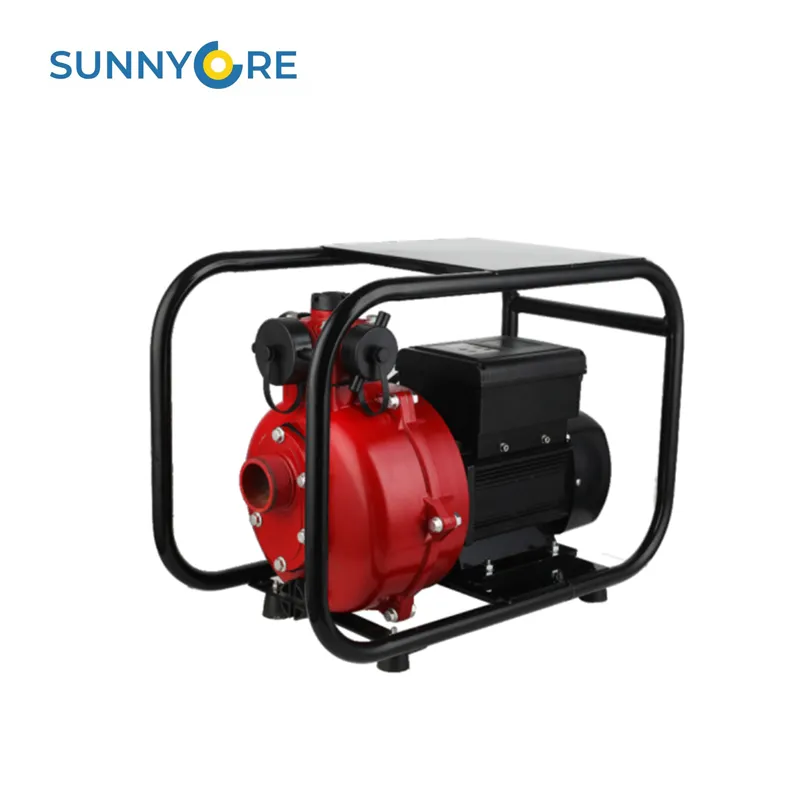
Water Pump For Farm Irrigation
This water pump for farm irrigation can be used for General water management, such as water transfer (from ponds, canals, ditches, and rivers to agricultural sites for crops and livestock as well as towns and villages for homes and businesses), water intake dredging, and tail-water reuse.
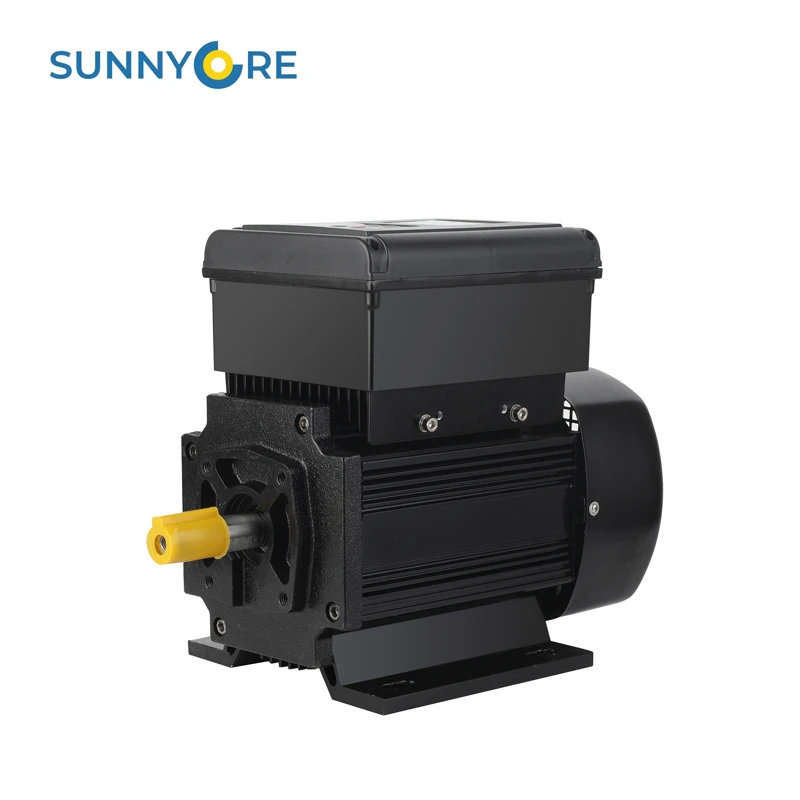
Permanent Magnet Agriculture Pump Motor
This permanent magnet variable frequency motor is mainly for agriculture pumps. Adjustable speed, high efficiency, both have single phase and 3 phase.

High Pressure Pump For Agriculture
This is 4inch high pressure pump for agriculture, it is surface irrigation pump with variable frequency copper motor.
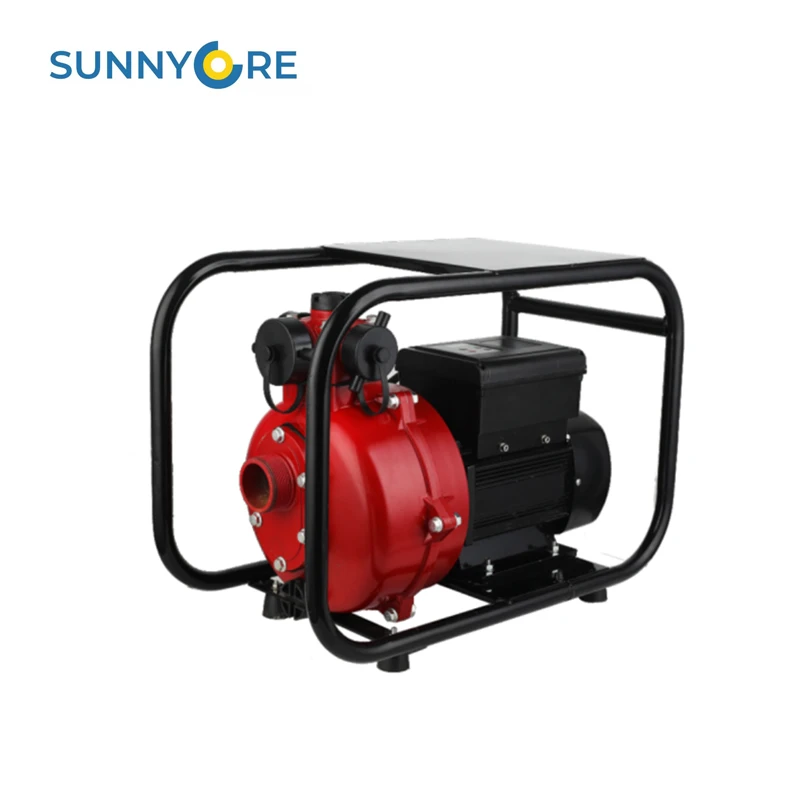
This agriculture pressure pump is energy saving, high pressure, large flow, used for Crop care, Livestock care, drinking water transfer, Aquaculture, farming General water management.
What is Agricultural Irrigation Pump?
Water pumps are machines for moving water, they play a fundamental part in agriculture as they move water from its source to the fields and crops. Water pumps can be used with many forms of irrigation, such as drip, sprinklers or with a hose.
There are a wide range of water pumps available, from simple manually operated pumps to those powered by fossil fuels or electricity.
Water conservation: Irrigation pumps allow for precise water delivery directly to the root zone of plants, minimizing water wastage through evaporation or runoff.
Increased yield: By ensuring consistent and adequate water supply, irrigation pumps promote healthy plant growth, leading to higher crop yields and improved quality.
Energy efficiency
Modern irrigation pumps are designed to be energy-efficient, reducing operational costs and environmental impact.
Customization
Farmers can tailor irrigation systems according to specific crop requirements, adjusting water flow rates and distribution patterns as needed.
Year-round cultivation
With reliable irrigation infrastructure, farmers can cultivate crops throughout the year, independent of seasonal rainfall patterns.
Types of Agricultural Irrigation Pump
Centrifugal pumps: Are the most commonly used for irrigation. They work by using a rotating impeller to create a flow of water. Centrifugal pumps are generally less expensive and easier to maintain than other types of pumps, but they may not be as efficient at moving water long distances or up hills.
Submersible pumps:Are designed to be placed underwater and are often used in deep wells or where the water source is located below ground level. Submersible pumps are typically more efficient and have a longer lifespan than other types of pumps, but they can be more expensive and more difficult to maintain.
Borehole pumps: Are designed for use in boreholes and wells, and are often used for irrigation purposes. They can be submersible or surface pumps, and their design allows them to lift water from great depths. Borehole pumps are ideal for areas where water sources are deep, and can be used to deliver water to remote locations.
Self-priming pumps: Are a type of centrifugal pump that can automatically prime themselves without requiring manual intervention, often used in irrigation systems where the water source is not consistently available. Self-priming pumps are a reliable option for irrigation, and are often used in combination with other pumps.
Multistage pumps: Are a type of centrifugal pump that use impellers to increase water pressure. Ideal for moving water over long distances and up hills, and are often used in irrigation systems that require high pressure. Multistage pumps are efficient, but they can be more expensive and more difficult to maintain than other types.
Piston pumps: Are positive displacement pumps that use a piston and cylinder to move water. They are often used in small-scale irrigation systems, and they are ideal for pumping water from shallow sources such as rivers or ponds. Piston pumps are reliable and efficient, and they are often used in combination with other pump types.
Hand pumps :Are a simple and cost-effective option for small-scale irrigation systems. They are manually operated, and they are ideal for pumping water from shallow sources such as wells or ponds. Hand pumps are easy to maintain and can be a good backup option in case of power outages or other emergencies.
Application of Agricultural Irrigation Pumps
Crop care
Such as floor and row irrigation, dewatering, and harvesting
Livestock care
Such as drinking water transfer and waste management
Aquaculture
Such as catfish, crawfish, and shrimp farming
General water management
Such as water transfer (from ponds, canals, ditches, and rivers to agricultural sites for crops and livestock as well as towns and villages for homes and businesses), sludge/sediment removal, water intake dredging, and tail-water reuse
Other agricultural operations
Such as peat bog harvesting and aquatic weed control
Impeller:It is rotating part of pump or turbine that provides centrifugal a cceleration to the
fluids and is called an impeller. Thus, an impeller is a circular metallic disc with abuilt-in-passage for the flow of fluid.An impeller can be further classified as closed, Semi Open and Open impellers.
Semi-open Impeller:If the vanes of the impeller are enclosed by shrouds only on back side then it is termed as semi-open impeller, It can work at higher speed. Such impellers must be adjusted so that the clearance between the open side of impeller vanes and bowls or volute face is within a tolerance of 0.1 mm.
Open impeller:If an impeller has no shrouds on its both ends, it is known as open impeller. The open impeller is less likely to be clogged with solids, but if it does, it is easy to clean it. Therefore, they are suitable to pump liquids carrying organic matter, paper pulp or other dense material such as sewage water.
Closed impeller:If the vanes of the impellor are surrounded by shrouds on both sides then it is called closed impeller These impellers can clog if solids or "stringy materials" are pumped. It's difficult to clean out these solids from between the shrouds and vanes. Therefore, these are used to pump clear fluids such as clean water.
Shaft:The shaft transfers the torque from motor to the impeller during startup and operation of pump.
Eye of impeller:When the pump operates, water from the source enters the Eye of Impeller. It is located at the end of suction line before the start of wanes of impeller.
Stuffing box:The portion of pump that houses the packing or mechanical seal is called stuffing box. It is usually referred to as dry portion of pump. The stuffing box is in the back of the impeller and around the shaft.
Casing:The main function of casing is to enclose the impeller from suction to delivery and therefore, it forms a pressure vessel for the fluid being pumped. The other function includes the provision of support and bearing medium for the shaft and impeller.
There are two types of casings:
A: Volute casing has impellers that get fitted inside the casings. Its main purpose is to help balancing the hydraulic pressure on the shaft of the pump.
B: Circular casing has stationary diffusion vanes surrounding the impeller periphery that converts speed into pressure energy. These casings are mostly used for multi-stage pumps and can be designed as solid casing (one fabricated piece) or split casing (two or more parts together)
Process of Agricultural Irrigation Pumps
Safety first
Whenever carrying out any work on your irrigation pump, or any electrical tool for that matter, make sure that it is not plugged into the mains.
Gaining access to the pump system
To enable you to gain access to the pump system, you need to find the right sized spanner to fit the valve. Th valve you are looking for is usually the one closest to the water pump, but if you're talking about a swimming pool pump, it could be the strainer basket.
Ensuring the pump is not damaged
You need to carry out a thorough inspection of the pump to ensure it is not damaged. Pay particular attention to the pipes to make sure they haven't cracked during cold spells. This is even more important if the pump has been shut down over the winter months.
Check to see if the drain plugs need retightening.
The best way of checking the valves is to operate them manually. Double-check that all other fixtures and fittings (nuts and bolts) are fixed firmly in position. Also, inspect the belts, pulleys and safety guard.
Hose test
Before connecting the hose, ensure it is unblocked and clean by flushing it through with clean water.
Opening the relief valves
In order to stop pressure from building up, you should open the relief valves. It's also a good idea to keep your eye on the pressure gauge too.
Attaching the hose
Connect the pump to the water source
Turn the water on
Turn the water on and wait for it to fill the pump's tank. You should be able to hear it doing so. Double-check by keeping an eye on the water pressure gauge to ensure its rising.
Turn the power back on
Turn the power back on, start the pump and allow it to run for approximately one minute.
Wait for the water to start running from the opened relief valve - then close it. The pump should turn off automatically once it's fully primed. If it doesn't, there may still be air in the system, and you will need to repeat the process as many times as necessary.
How to Maintain Agricultural Irrigation Pumps
Change the engine oil and filter
Check drive belts (if any)
Grease all drive shafts on pump, and motor
Replace fuel filters
Check the operation of the chemical injection pumps
Check and clean the battery power cables
Drain, flush and refill the cooling system,for 30-60 minutes.
Drain and replace the lubricating oil in pump gear drive
Refill the reservoir for lubrication of the pump drive shaft
Check the gear drive to be sure it is free moving and clean the non-reverse
Pins with a wire brush, and lubricate each pin
Start the motor and allow it to run at 1000 rpm
Factors to Consider When Choosing an Irrigation Pump
When choosing an irrigation pump, there are several factors to consider. Here are some of the most important:
The type of water source you have will impact the type of pump you need. If you have a shallow well or a river, a centrifugal pump may be sufficient. If you are using water from a lake or pond, a self-priming pump may be suitable. If your water source is located below ground level, a submersible pump / borehole may be necessary.
The amount of water you need to move and the distance it needs to be moved will impact the pump's flow and pressure requirements. Make sure to choose a pump that can handle the specific requirements of your irrigation system and nozzle design. In general, centrifugal pumps are best for low- to medium-flow applications, while multistage pumps are better for high-pressure applications.
Irrigation pumps can be powered by electricity, engine driven via petrol or diesel, or solar energy. The type of power source you choose will depend on your location and specific needs. Electric pumps are generally the most convenient and easiest to maintain, but they may not be suitable if you are based in a remote location, or electricity output is unreliable due to power outages. Petrol and diesel driven pumps can handle large volumes of water, offer better mobility if mounted on a trailer but are generally more expensive and require more maintenance.
Ensure designs of pumps are chosen which are easy to maintain and built to last. Look for pumps made from suitable higher-grade materials for durability such as ductile grades of cast iron, or stainless steel in particular if units will be located in unsheltered areas and exposed to the elements. Ensure correct filtration is used on pump suction pipework to ensure pumps remain clean and free from debris, and perform regular maintenance as recommended by the manufacturer.
Types of Irrigation Methods
In addition to selecting the right pump, it's important to consider the type of irrigation method that will work best for your business needs. There are several methods available, each with its own benefits and drawbacks. Here are some of the most common types
Sprinkler
This type of irrigation uses a system of sprinklers to distribute water over the plants or crops. Sprinkler irrigation is versatile and can be used for a variety of crops, but it may not be the most water-efficient method.
Drip
In this method, water is delivered directly to the roots of plants using a network of tubes and emitters. Drip irrigation is highly efficient and can save water, but it can be more expensive to install and maintain than other methods.
Flood
This method involves flooding fields or beds with water to hydrate crops. This method is inexpensive and easy to install, but it can result in water wastage and soil erosion.
Centre pivot
This method involves a system of pipes that pivot around a central point, delivering water to crops in a circular pattern. Centre pivot irrigation is highly efficient and can be used for large-scale irrigation, but it may not be suitable for smaller fields.
Subsurface
In this method, water is delivered directly to the roots of plants using an underground network of pipes. Subsurface irrigation can be highly efficient and conserve water, but it can be expensive to install and maintain.
Manual
This involves manually watering plants using a hose or watering can. Manual irrigation is labour-intensive and not ideal for large-scale operations, but it can be effective for smaller gardens or lawns.
Taizhou Inwon Technology Co.,ltd is a professional enterprise in the production of water pumps. Located in Daxi Town, Wenling Taizhou City, Zhejiang of China, which is well known as "Hometown of Water Pump".

FAQ
Q: How does agricultural irrigation work?
Q: How does a irrigation pump work?
Q: What are the benefits of agriculture irrigation?
Q: What is the best irrigation system for a farm?
Q: What is the most effective irrigation system?
The motor in a submersible pump is cooled by the liquid that it is moving/pumping. Therefore as long as the pump is submerged and there is enough pressure, the pump can run.
Q: What type of pump is best for irrigation?
Centrifugal pumps are the most commonly used type of pump for irrigation. They work by converting rotational energy from an electric motor into kinetic energy in the fluid being pumped. This kinetic energy then converts to pressure energy as the fluid leaves the impeller, producing the flow of water.
Q: Does an irrigation pump need a pressure tank?
Q: What is the cheapest irrigation method?
An irrigation system may use valves to separate fields into zones. This allows a limited water source to provide water to a large area by water- ing one part at a time. Drip irrigation systems can operate by gravity. This system is inexpensive but it can irrigate only a small plot of land 35' x 35'.
Q: What happens if an irrigation pump runs dry?
Q: How big of a pump do I need for irrigation?
Q: What is the difference between a booster pump and an irrigation pump?
Q: What is the difference between a pressure tank and a pump?
Q: How much does it cost to replace an irrigation pump?
Q: Do irrigation pumps get hot?
Q: How long can a irrigation pump run without water?
Q: Why do I have to keep priming my irrigation pump?
Q: How often should an irrigation pump cycle?
Q: Does an irrigation pump need a pressure tank?
Q: Is priming a pump necessary?
Q: What is the difference between a pressure pump and a pressure tank?
Hot Tags: Agricultural Irrigation Pumps, China Agricultural Irrigation Pumps manufacturers, suppliers, factory, Multi Stage High Pressure Water Pump, High Pressure Booster Pumps, 3 Phase Permanent Magnet Motor, Variable Frequency Drive AC Motor, Multi Stage Pressure Booster Pump, High Pressure Pump For Agriculture


Send Inquiry
