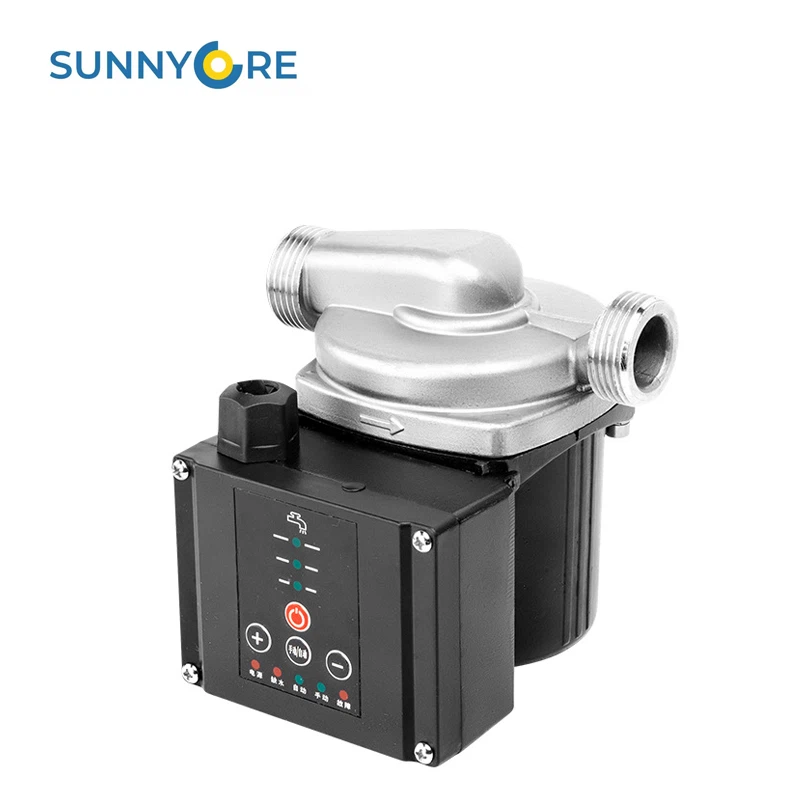
Circulation Pump

Your Leading Taizhou Inwon Technology Co.,Ltd. Supplier


Taizhou Inwon Technology Co.,ltd is a professional enterprise in the production of water pumps. Located in Daxi Town, Wenling Taizhou City, Zhejiang of China, which is well known as"Hometown of Water Pump".

Taizhou Inwon Technology Co.,ltd is engaged in various kinds of high quality permanent magnet variable frequency water pumps, such as booster pumps, self priming pumps, multi-stage pumps, shield circulation pumps, motors, etc.

As the innovator and leading manufacturer of Automatic permanent magnet variable frequency water pumps and motors in China, we always keep excellence and make progress constantly.

Our mission is to provide the best reliable quality permanent magnet variable frequency water pump and motor at competitive price to meet our customers.

 
Why Choose Us?
 
01/

High quality
Our products are manufactured or executed to very high standards, using the finest materials and manufacturing processes.

02/

Competitive Price
We offering a higher-quality product or service at an equivalent price. As a result we have a growing and loyal customer base.

03/

Rich experience
Our company has many years of production work experience. The concept of customer-oriented and win-win cooperation makes the company more mature and stronger.

04/

Global shipping
Our products support global shipping and the logistics system is complete, so our customers are all over the world.

05/

After-sale service
Professional and thoughtful after -sales team, let you worry about us after -sales Intimate service, strong after -sales team support.

06/

Advanced equipment
A machine, tool or instrument designed with advanced technology and functionality to perform highly specific tasks with greater precision, efficiency and reliability.

First 123 Last 1/3

What is Circulation Pump?


A circulator pump or circulating pump is a specific type of pump used to circulate gases, liquids, or slurries in a closed circuit. They are commonly found circulating water in a hydronic heating or cooling system. Because they only circulate liquid within a closed circuit, they only need to overcome the friction of a piping system (as opposed to lifting a fluid from a point of lower potential energy to a point of higher potential energy).

Benefits of Circulation Pump


Ease of installation:Circulation pumps are fairly easy to install. No special permits or special tools are usually required, although we always recommend a plumber is employed, and there are many models designed specifically for home plumbing systems.


Convenience:Hot water is available nearly immediately when a tap is opened. The convenience of having nearly instantaneous hot water is a huge draw for home owners.


Ease of operation:Most units are very easy to operate. Once they are set you seldom need to make any adjustments.


Water usage:Less water is wasted since hot water is delivered nearly immediately. In areas where water is in short supply this is especially helpful. A significant amount of water can be saved every year.


Types of Circulation Pump

Basic circulation pump

This System uses a small pump that is constantly circulating water thru the home's main water lines, also known as trunk lines or water supply pipes. If the water isn't used, it is returned back to the water heater.

On-demand circulation pump

An on-demand system operates when there is a demand for hot water. If a hot water faucet is opened a motion detector, or flow switch, will trigger the pump to turn on. Once the pump turns on, it will continue to circulate the water through the pipes until the water reaches a set temperature.

Timer circulation pump

A Timer system allows you to program the pump to match your hot water needs. You can set the adjustable timer to the times you'll need hot water. For example, if you always take a shower at 7am and run the dishwasher at 8:30am, you may want to set the pump to cycle on at 6am and cycle off at 10:30am.

Components of Circulation Pump


1. Impeller: The impeller is the rotating part of the pump that imparts kinetic energy to the fluid. It has blades that accelerate the fluid as it moves radially outward from the pump's center.


2. Motor: The motor provides the mechanical power to turn the impeller. It can be powered by electricity, diesel, gasoline, or other energy sources.


3. Shaft: The shaft connects the motor to the impeller, transmitting the motor's rotational force to the impeller.


4. Bearings: Bearings support the shaft and reduce friction, ensuring smooth rotation of the impeller.


5. Housing or volute: The housing surrounds the impeller and channels the fluid from the inlet to the outlet. The volute shape helps to maintain constant pressure as the fluid flows through the pump.

Circulation Canned Motor Pump
Shield Circulating Pump


6. Seals: Seals, such as mechanical seals or packing, prevent fluid leakage from the pump's internal components to the exterior environment.


7. Inlet and outlet: The inlet is where the fluid enters the pump, and the outlet is where the pressurized fluid exits.


8. Suction side: This refers to the portion of the pump that handles the intake of the fluid, including the strainer or suction screen to prevent debris from entering the pump.


9. Discharge side: This is the portion of the pump that handles the outflow of the pressurized fluid.


10. Coupling: The coupling connects the motor's shaft to the pump's shaft, allowing for some misalignment and providing a means for assembly and disassembly.


11. Foot or base plate: The foot or base plate secures the pump to its mounting surface and provides stability.


12. Pump controller: Some pumps may include a controller that regulates the pump's operation based on pre-set parameters or feedback mechanisms.


13. Pressure relief valve: A pressure relief valve is sometimes incorporated to protect the pump against excessive system pressure.


14. Non-return valve: A non-return valve (check valve) prevents backflow of the fluid, ensuring unidirectional flow through the system.


15. Strainer or filter: A strainer or filter may be installed in the suction side to remove particles that could potentially damage the impeller or clog the system.

Shield Circulation Pump

Material of Circulation Pump


For freshwater circulating water pumps, castings are typically cast-iron bronze fitted with 410-type, stainless-steel shafting. A vertical wet pit pump type VS1 would use bronze, rubber or composite materials for bearings.


How to Maintain Circulation Pump
 

Periodic maintenance
Make sure there is no noise and vibration.

01/

Check the pump operation mode according to its head-flow characteristic.

02/

Check for excessive heating of the pump motor.

03/

Resume lubrication of the threaded part of the flange connections bolts.

04/

Visually check for grounding on the pump body.

05/

Check for leaks at the pump connections to the pipeline and, if necessary, tighten the connections and replace gaskets.

06/

Check the quality of the electrical cable connections in the terminal block and ensure that there is no moisture on it.

How to Lubricate a Circulating Pump

Determine the oil level
Locate the oil level window on the side of the circulating pump. The pump needs to be shut off and leveled to determine the oil level properly. The oil level should be even with the center point of the lowest roller.


Locate the lubrication ports
Turn off the circulating pump. Shut off the breaker to the pump to reduce the chance of electrocution while lubricating the bearings. There should be small holes in the circulating pump used to put oil in for the bearings. These holes are often conveniently labeled with the word “oil,” or they have caps to keep dust out.

Determine the proper lubrication oil

Before attempting to lubricate your circulating pump, it is essential to refer to the user’s manual to ensure that you have acquired the correct lubricating oil. Different bearings require different viscosity of the lubricating medium.

Lubricate the bearings

Once you have located the oil fill holes, add a drop or two of oil in each hole and remove any cap in place. You may need to use a pair of needle-nose pliers to remove the caps from the pump. If you use more than a few drops, the oil tends to attract dust that will cause a problem by gumming up the pump. Be sure to re-insert any caps that were in the holes.

Finish up

Once you have the oil inserted into each lubrication hole, wipe any excess oil from the openings. This will help reduce the collection of dust on the exterior of the circulating pump. Next, put the caps back into the fill hole. Turn the breaker back on for the pump, and then turn on the circulating pump. Ensure that everything is running smoothly and then turn the water back on.


How to Choose Circulation Pump
1. Construction material

In residential closed loop heating applications circulator pumps are usually made of cast iron. Stainless steel and bronze circulators are typically used in domestic hot water recirculation applications because they are lead-free.

2. Connection method

Residential circulators are commonly connected to supply piping with flanges ranging in size from ¾” to 1-1/2”. As a rule, flange materials should match the material of the pump being used. Circulators can also be connected using sweat and threaded connections. These are frequently found in plumbing applications.

3. Size

A perfectly-sized circulator will accommodate a system’s flow rate demands while overcoming it’s pressure loss. Consult manufacturer pump curves to size a pump according to flow rate (x-axis) and head loss (y-axis).
Fittings, check valves, mixing valves, balancing valves, heat exchangers, tubing and other flow-impacting elements should also be taken into account when sizing a circulator pump.
Pump Products application engineers are standing by to provide technical assistance.

4. Horsepower

A circulator pump’s horsepower (HP), or motor strength, directly affects it’s flow rate and head loss performance. Horsepower must be considered in connection with RPMs when choosing a pump based on the GPM and head loss demands of your system. Our application engineers are available to provide technical assistance.

5. Special features

Integral flow check is a popular feature insuring that a check valve will not be needed elsewhere in the system. Variable speed features available in some models make it possible to fine tune the operation of a circulator to enhance performance and conserve resources. Consider these and other features when selecting a circulator pump.

Magnetic Drive Circulation Pump


How Does a Circulating Pump Work?

A circulating pump works as follows:

1.Water enters the pump through the inlet, and makes its way in the eye of the impeller, where it gets trapped in between the impeller’s blades.
2.A rotating magnetic field forces the rotor to start spinning.
3.Since this rotor is attached to the shaft, which in turn is connected to the impeller, they will also start to rotate. This results in kinetic energy in the water, which will start to move out.
4.As soon as the water reaches the edge of the impeller the velocity rate will be very high. It then goes into the volute, and impacts the pump casing’s wall. This impact results in pressure.
5.The flow rate will depend on this level of pressure. The volute’s diameter will expand, resulting in the water velocity to decrease, and so the pressure increases.
6.If there is a higher pressure at the outlet, more water is forced to circulate through the pipes, to where it is needed.


Possible Malfunctions and Methods for Their Elimination
 

All work on repairing circulating pumps should be carried out after disconnecting the power and draining the section.


Malfunction

Cause

Repair

The pump turns on, makes noise, but the shaft does not rotate

The shaft oxidized after a long downtime

If the pump is blocked, do not leave the motor powered to prevent damage to the winding.
Drain the water and unscrew the screws that tighten the pump housing with the electric motor. Remove the electric motor with the impeller and rotor. Turn the impeller by hand.
In low-power pumps, the shaft can be unlocked by turning it with a screwdriver for which a special notch is provided in the shaft end.

- - -

A foreign object blocked the impeller

Remove the electric motor. Remove the foreign object.
To prevent re-blocking, install a mesh filter in front of the pump.

- - -

Electrical power problems

Check the power supply voltage for compliance with the circulating pump passport data. Check the correctness of the connections in the terminal box and the presence of all phases.

The pump does not turn on and makes no sound

The power supply voltage is absent or does not correspond to the passport data

Check and correct the problem.

- - -

The fuse is damaged (if the pump is equipped with one)

Replace the faulty fuse. If replacing the fuse does not solve the problem, the motor winding may be burned out.

The pump turns on but stops after a while

Lime deposits have formed between the rotor and the stator housing

Remove the motor block and clean the stator housing from scale.

Sharp noise when turning on

Air in the 'dry run' flow part

Release the air and install an automatic air vent at the top of the pump assembly to prevent further air buildup.

- - -

Cavitation (accompanied by vibration)

Increase the pressure in the suction pipe to a value exceeding the cavitation margin.

Pump vibration

Worn bearing (accompanied by noise)

Replace the worn bearing.

Delivery and head below rated values

Reverse rotation of the impeller

Typical for incorrectly connected three-phase pumps.

- - -

The circulatory ring has too high hydraulic resistance

Clean the filter and check the diameter calculation of the regulating fittings and pipes.

External motor protection trips after starting

Problems with the electrical system

1. Check the presence of phases in the terminal box.
2. Check for possible open or dirty fuse contacts.
3. Check the phase resistance to ground.


Our Factory

Taizhou Inwon Technology Co.,ltd is a professional enterprise in the production of water pumps. Located in Daxi Town, Wenling Taizhou City, Zhejiang of China, which is well known as "Hometown of Water Pump".

productcate-1-1
 
FAQ

Q: How does a recirculation pump work?

A: Full Recirculating Pump System
This system creates a loop from the water heater to the faucet and back again. The unused hot water is drawn back through this loop by the pump, so when you turn on your hot water faucets, you get hot water quickly.

Q: What is the difference between a pump and a circulator?

A: A circulator is different because it's working within a closed, pressurized hydronic system. It doesn't have to lift the water to the top of the system because the water is already up there. The circulator doesn't lift anything; it circulates. It's very similar to the motor on a Ferris wheel.

Q: When should you use a recirculating pump?

A: If the furthest fixture is away from the water heater, then code will require a recirculation system be provided. Per the International Plumbing Code, a fixture exceeding 50 feet from the water heater is the cutoff limit requiring a recirculating pump, which is why so many buildings have this pump.

Q: Should a circulator pump run all the time?

A: First, the answer is YES, you should keep your circulator pump on all summer. Here are two reasons why: 1 - Pumps last a long time if they are run continuously. It will also keep its high efficiency.

Q: Where should a recirculating pump be installed?

A: The circulation pump and Flow Monitor can be mounted in either the cold-water supply line to the water heater (right side) or in the hot water supply line going out of the water heater into the house (left side).

Q: What happens when a circulation pump fails?

A: Without the pump functioning correctly, hot water doesn't circulate through the system, leading to a significant drop in heating efficiency. This not only results in cold spots throughout your home but also forces you to rely on alternative, often less efficient, heating methods.

Q: What are the 3 types of circulator?

A: There are three different types of circulators: Y-junction circulators, differential phase-shift circulators, and Faraday rotation circulators. The most popular configurations are the junction circulators that can be constructed in waveguide or strip line and microstrip, for example.

Q: Do circulating pumps make noise?

A: Sometimes even a quality pump can make unpleasant noise, especially if it has been incorrectly selected, installed or insufficiently maintained. Both the circulator pump and the boiler pump can make unwanted noises.

Q: Is it OK to turn off recirculating pump?

A: Unplugging a hot water recirculating pump is generally unnecessary when you turn off the water in the house. However, it is a good idea to turn off the power to the pump before attempting to service it or make any repairs.

Q: How often should you run a recirculating pump?

A: There can be a significant reduction in energy and water bills when the recirculation system is only running for a couple of hours a day during peak usage. If you have a hot water recirculation pump that did not come equipped with a timer, it is possible to use an aftermarket timer on the pump's power outlet.

Q: How long do water circulation pumps last?

A: About 10-15 years
Generally, a well-maintained circulator pump can last about 10-15 years. However, this lifespan can vary depending on several factors, including the quality of the pump, the conditions under which it operates, and how well it is maintained.

Q: What size recirculating pump do I need?

A: Circulating pumps should be sized to meet around 60 percent of the heating load, which is the calculation you have performed including water needs, leakage, and pressure. Fitting a pump to manage this amount of the load should give you 90-95 percent of the hot water needs for your home.

Q: How long does it take to install a circulating pump?

A: A typical installation can be completed in less than 2 hours. If access in the area where the system will be installed is limited additional time may be required. 9. How is the circulating pump activated?

Q: How do I choose a circulator pump?

A: To choose the right three-speed circulating pump, consider the specific temperature requirements of your system and the desired level of control. If you have varying heating or cooling needs in different zones or rooms, a three-speed pump can help optimize efficiency by adjusting the flow rate accordingly.

Q: What type of motor is a circulator pump?

A: The motor, in this case, is an induction type which allows the conversion of electrical energy into mechanical energy. The latter is then used to drive the pump and consequently, the water is moved. A circulating pump will have an inlet and an outlet.

Q: What is the difference between a booster pump and a recirculation pump?

A: From the perspective of boosting strength, booster pumps mainly solve the problem of lower water pressure, which is a type of pump with lower pressure; and the circulating pump has a higher pressure than the booster pump, which can drive the circulation of the entire heating system.

Q: Can you oversize a circulator pump?

A: An oversized circulator will result in higher initial cost for the pump, greater energy use, and possible premature pipe failures due to wear and tear from too much flow, resulting in costly damages from a leaking system.

Q: Does a recirculating pump need a return line?

A: Instant Hot Water Recirculating Systems
This recirculating system does not require a dedicated hot water return loop. It can be installed and used in any house. Instant hot water systems come in many different varieties. The two main pump locations are over the water heater and under the sink.

Q: What are two types of circulating pumps?

A: There are basically two types of pumps: old three-speed / three-stage and modern electric pumps. Improperly selected circulator pump can cause heating discomfort, uneven heating, high energy consumption and a lack or excess of hot water.

Q: What is the purpose of boiler circulating pump?

A: Boiler circulating pumps circulate water within the boiler to enhance boiler operation. They take suction from a header connected to the bottom of the boiler drum and discharge through additional tube circuits. This means the water pumped is at boiler temperature and pressure.


We're professional circulation pump manufacturers and suppliers in China, specialized in providing high quality products. We warmly welcome you to wholesale cheap circulation pump for sale here from our factory. For price consultation, contact us.

Agricultural Irrigation Pump, Shielding Circulating Pump, Multistage Pressure Pumps

(0/10)

clearall