

What are the certifications required for multistage booster pumps?
May 20, 2025
Hey there! I'm a supplier of Multistage Booster Pumps, and today I'm gonna talk about the certifications required for these pumps. It's super important to understand these certifications because they ensure the quality, safety, and performance of the pumps.
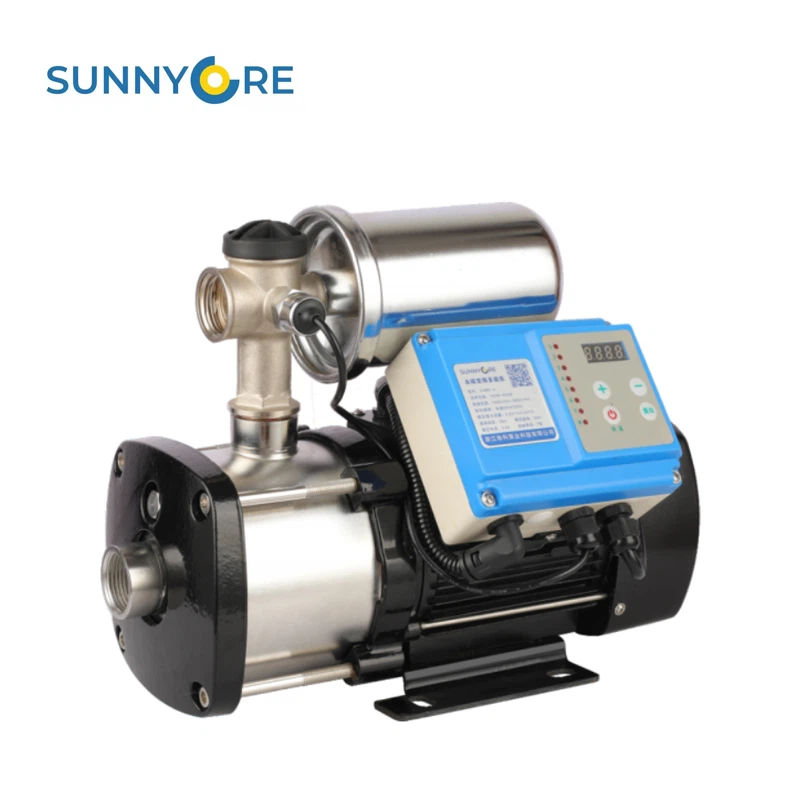
First off, let's get a basic understanding of what multistage booster pumps are. These pumps are designed to increase the pressure of a fluid by passing it through multiple stages. They're commonly used in various applications, like water supply systems, industrial processes, and even in some residential settings. If you're interested in checking out some of our products, you can click on the links: Multi Stage Pressure Booster Pump, Multistage Booster Pumps, and 3 Stage Centrifugal Pump.
One of the most well - known certifications is the ISO certification. ISO, or the International Organization for Standardization, sets global standards for a wide range of products and services. For multistage booster pumps, ISO 9001 is a big deal. This certification focuses on the quality management system of the manufacturer. It means that the company has a well - defined process for ensuring that the pumps are made to a high standard. From the design phase to the production and after - sales service, every step is carefully monitored and controlled. When a pump has the ISO 9001 certification, you can be pretty confident that it's been made with quality in mind.
Another important one is the CE certification. CE stands for Conformité Européene, which is French for European Conformity. This certification indicates that the multistage booster pump meets the health, safety, and environmental protection standards set by the European Union. If you're planning to sell or use the pumps in Europe, the CE certification is a must. It covers a variety of aspects, like electrical safety, mechanical safety, and electromagnetic compatibility. For example, the pump needs to be safe to operate in terms of electrical connections, and it shouldn't interfere with other electronic devices around it.
In the United States, the UL certification is significant. UL, or Underwriters Laboratories, is an independent organization that tests and certifies products for safety. A multistage booster pump with the UL certification has been tested to meet the safety standards set by UL. This includes things like fire safety, electrical shock protection, and proper construction materials. If you're in the US market or aiming for it, having the UL certification can give your customers peace of mind.
Then there's the NSF certification. The National Sanitation Foundation (NSF) focuses on products that come into contact with drinking water. If your multistage booster pump is used in a water supply system for potable water, the NSF certification is crucial. It ensures that the materials used in the pump don't leach harmful substances into the water. This is super important for public health, as we don't want any contaminants getting into our drinking water.
For pumps used in the oil and gas industry, API certifications are essential. The American Petroleum Institute (API) sets standards for equipment used in the petroleum and natural gas industries. API 610, for example, is a standard for centrifugal pumps used in the oil and gas sector. Pumps with API certifications are designed to handle the harsh conditions and demanding requirements of this industry, such as high - pressure and high - temperature environments.
Let's talk a bit about how these certifications are obtained. It's not an easy process. The manufacturer has to go through a series of tests and inspections. For the ISO 9001 certification, the company needs to document its quality management processes, train its employees, and then undergo an audit by an accredited certification body. The audit checks if the company is following its own processes and if those processes are effective in ensuring product quality.
The CE certification involves a similar process. The manufacturer has to carry out self - assessments or have the product tested by a notified body. The notified body is an organization authorized by the European Union to test and certify products. They'll check if the pump meets all the relevant EU directives.
For the UL certification, the pump has to be sent to UL's testing facilities. UL engineers will conduct a series of tests on the pump, looking at its electrical, mechanical, and fire - safety features. Only if the pump passes all these tests will it receive the UL certification.
Now, you might be wondering why these certifications matter so much. Well, for one, they're often required by law in many regions. If you don't have the necessary certifications, you won't be able to sell your pumps in certain markets. Secondly, they build trust with your customers. When a customer sees that a pump has multiple certifications, they know that it's been thoroughly tested and meets high - quality standards. This can lead to more sales and a better reputation for your business.

As a supplier of Multistage Booster Pumps, I can tell you that we take these certifications very seriously. We make sure that all our pumps go through the necessary testing and meet the relevant standards. This way, we can offer our customers reliable and high - quality products.
If you're in the market for Multistage Booster Pumps, whether it's for a small residential project or a large industrial application, I encourage you to consider the certifications. It's a sign of a good - quality product. And if you have any questions or are interested in purchasing our pumps, don't hesitate to reach out. We're here to help you find the right pump for your needs and ensure that you get the best value for your money.
In conclusion, understanding the certifications required for multistage booster pumps is crucial for both manufacturers and customers. These certifications not only ensure the safety and quality of the pumps but also open up opportunities in different markets. So, if you're looking for a reliable supplier of Multistage Booster Pumps, keep an eye out for those important certifications.
References
- International Organization for Standardization (ISO) official documentation
- European Union directives related to CE certification
- Underwriters Laboratories (UL) standards and testing procedures
- National Sanitation Foundation (NSF) guidelines
- American Petroleum Institute (API) standards