

What factors should be considered when selecting a self priming booster pump?
Dec 30, 2025
Hey there! As a supplier of self priming booster pumps, I've seen firsthand how tricky it can be to pick the right one. These pumps are super useful, whether you're dealing with pool water or just need a boost for your home water supply. But what factors should you really consider when making this important decision? Let's dive in!
Flow Rate
First off, let's talk about flow rate. Simply put, flow rate is how much water the pump can move in a given amount of time, usually measured in gallons per minute (GPM) or liters per second (L/s). You need to figure out how much water you'll actually need for your specific application.
For instance, if you're using a Self Priming Pump For Swimming Pool, you'll want to ensure the pump can circulate the entire volume of the pool within a reasonable time. A larger pool will clearly require a pump with a higher flow rate. On the other hand, if it's for a small household task like watering a garden or filling a small tank, a lower flow rate might be just fine.
Head Pressure
Head pressure is another crucial factor. It refers to the height that the pump can lift water vertically. You can think of it as the “push” that the pump needs to get the water to where it's supposed to go.
If your water source is far below the area where you need the water, or if there's a long distance and lots of fittings in the piping system, you'll need a pump with a higher head pressure. For example, if you're pumping water from a well that's deep underground to the second floor of your house, a pump with enough head pressure will ensure the water actually reaches its destination. However, if the vertical distance is short, you won't need to invest in a high - head pressure pump.
Self - Priming Capability
As the name suggests, self - priming is a key feature of these pumps. Self - priming means the pump can remove air from the suction line and start pumping water without the need for manual priming. This is incredibly convenient, especially in situations where you can't easily access the pump for priming.
For a Self Priming Pump for Water used in a home or remote location, the self - priming capability can save you a lot of hassle. The time it takes for a pump to self - prime also matters. Some pumps can prime themselves in a matter of seconds, while others may take a few minutes. If time is of the essence, you'll want a pump with a fast self - priming time.
Power Source
You'll also need to consider the power source for your pump. There are mainly two types: electric and gasoline - powered pumps.
Electric pumps are generally more efficient, quieter, and easier to maintain. They're a great option if you have a stable electrical supply. Most residential and small - scale commercial applications use electric Self Priming Booster Pump. However, if you're working in a location without access to electricity, like a remote construction site or a rural area, a gasoline - powered pump might be your best bet. Although they're louder and require more maintenance, they offer the flexibility of being used anywhere.
Durability and Build Quality
Nobody wants to replace a pump every few months. That's why durability and build quality are so important. Look for pumps made from high - quality materials that can withstand the conditions they'll be exposed to.

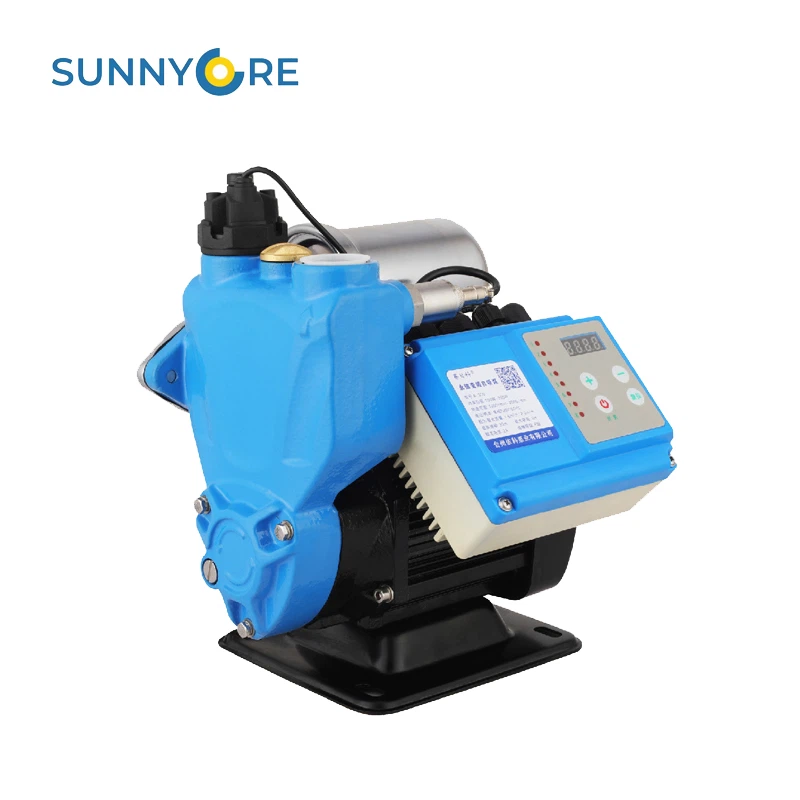
For pumps used in outdoor environments or with corrosive water (like a pool with high chemical content), pumps made from corrosion - resistant materials such as stainless steel or high - grade plastics are a must. The quality of the seals and bearings also affects the lifespan of the pump. A well - built pump with good seals and bearings will last longer and require fewer repairs.
Noise Level
In some settings, noise can be a real issue. If the pump will be installed close to living areas, a noisy pump can be a nuisance. Electric pumps generally tend to be quieter than gasoline - powered ones.
When shopping for a pump, you can check the manufacturer's specifications for the noise level, usually measured in decibels (dB). A lower dB rating means a quieter pump. Some modern pumps are designed with noise - reducing features, such as insulated casings, which can be a great option if noise is a concern.
Automatic vs. Manual Operation
You have the option of choosing between an automatic and a manual self - priming pump. An Automatic Self Priming Pump has built - in sensors that can start and stop the pump based on the water level or pressure. This is very convenient as it eliminates the need for constant monitoring.
For example, in a household water supply system, an automatic pump will turn on when the water pressure drops (like when you turn on a faucet) and turn off when the pressure is back to normal. On the other hand, a manual pump requires you to start and stop it manually. Manual pumps are simpler and often more affordable, but they need your attention every time you want to use them.
Cost
Last but not least, cost is always a consideration. You need to balance your budget with the features and performance you need.
Sometimes, spending a bit more upfront on a high - quality pump can save you money in the long run. A cheaper pump might not last as long or perform as well, leading to more frequent replacements and higher overall costs. Look for pumps that offer a good combination of the factors we've discussed above at a reasonable price.
So, there you have it! These are the main factors to consider when selecting a self priming booster pump. As a supplier, I'm here to help you make the best choice for your needs. If you're interested in purchasing a self priming booster pump or have any questions, feel free to reach out and we can start a discussion about which pump will be perfect for your application.
References
- General knowledge from the pump manufacturing industry
- Product specifications and manuals from various self priming booster pump manufacturers